He cannot stop. Not even to fall asleep.
Attention does not hold, the body does not settle, the evening finds no end. In children you see it at school, in adults in the unfinished things.
What it looks like day to day.
If you recognise three or more, it is worth looking not at each complaint separately, but at the system that connects them.
- 01Falling asleep in the evening is a daily struggle
- 02Attention holds only with strong interest
- 03The body is in motion even when it should be still
- 04Waking in the morning is especially hard
- 05The day ends with more started than finished
The complaint is on the surface. The control sits deeper.
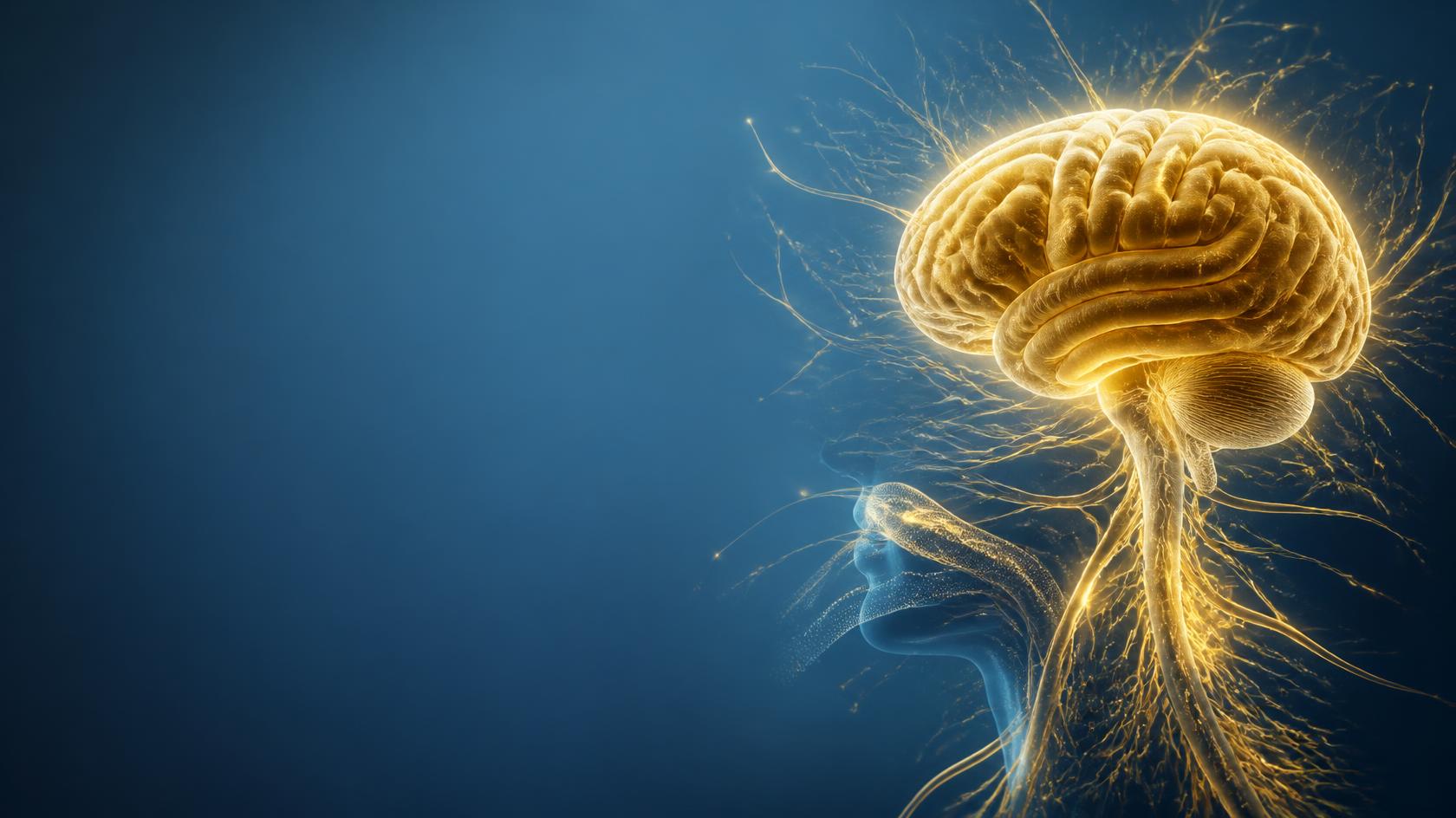
Attention and rest are governed by the same mechanisms of arousal and inhibition. A child or an adult with ADHD is not “less focused” — the regulation of the level of alertness works differently.
That is why sleep is almost always part of the picture. Poor sleep worsens attention, and the inability to settle worsens sleep. The loop closes and sustains itself.
NESA does not treat ADHD and replaces neither therapy nor medication. It works on autonomic regulation — above all on sleep and on the body’s ability to come down in the evening.
We force nothing. We speak the language the body already uses.
NESA XSIGNAL® is a certified medical device for non-invasive neuromodulation of the autonomic nervous system.
Your body runs on electricity
The autonomic nervous system — the one that governs sleep, alertness, bladder and digestion — works at very low frequencies: between 1 and 14 cycles per second.
NESA speaks in the same window
Microcurrents in that same frequency range, delivered through gloves and ankle cuffs while you lie down or sit in a chair. No needles, no medication, no preparation.
The fact that you cannot feel it is why it works
The signal sits below the threshold of sensation. Because it does not trigger the body’s defences, the nervous system does not habituate to it, and the signal can accompany it session after session.
The practitioner’s hands stay free
The session runs alongside another therapy — physiotherapy, conversation, rehabilitation. Not a separate appointment, but a layer over the treatment already under way.
Manufacturer data, NESA (NGS Health and Mind S.L.), post-market surveillance system, as of July 2026. The zero refers to reported serious adverse events, not to the absence of any reaction whatsoever.
When would I notice anything?
It depends on one thing: how long the regulation has been disturbed. We say so up front, so you know what to expect — and so you do not stop after the third session because nothing has happened yet.
The first changes are usually felt here — most often in sleep and in recovery.
The more substantial change comes in this range, at a steady rhythm of two sessions a week.
With a chronic profile the work is done in blocks. After each block, a fresh assessment with objective measures, not by feel alone.
A guiding framework from practice, not a promise of results. The exact schedule is set by the practitioner delivering the treatment.
The figures come from the manufacturer — with the source.
NESA is used in clinics and hospitals across 53 countries and is the subject of more than 20 peer-reviewed publications. The manufacturer publishes the results together with the journal and PMID of each study — so anyone can check the source themselves instead of relying on a retelling.
Where this leads.
A complaint rarely belongs to one specialty alone. This is where one usually starts with it — and what each page covers.
Short answers, no hedging.
Is NESA a treatment for ADHD?
No. ADHD is diagnosed and treated by a specialist. NESA works on autonomic regulation, which affects sleep and the level of alertness — that is support, not treatment.
Is it suitable for children?
The treatment is non-invasive and painless. Whether it is suitable for the particular child is judged by the treating practitioner — we do not take on that judgement.
Can the medication be stopped?
That is decided solely by the doctor who prescribed it. Never because of a treatment.
How does a session go with a child?
In a chair, with gloves and ankle cuffs, about an hour. The child can read, watch or talk to the practitioner — nothing restricts them.
It rarely comes alone.
Complaints of the autonomic nervous system rarely arrive on their own. If you recognise another one here, that is most likely not a coincidence.
Where can I get a NESA session?
The authorised centres in Bulgaria — Sofia, Plovdiv and Pleven — with address, phone and contact person.
NESA information pack
Enter your e-mail, confirm with one click — and the NESA presentations (BG · DE · EN) arrive automatically. Free, no spam.