Recovery that outpaces the load.
Neuromodulation of the autonomic nervous system speeds recovery, deepens sleep and optimises load management — for elite and amateur athletes.
Information for healthcare professionals
Autonomic load looks different depending on the sport.
Real, precisely cited science for each sport individually — not generic “recovery” talk.
Do you recognise yourself?
Recovery and overtraining
Like an engine at high revs that cannot cool down. In overtraining the “gas” dominates and the “brake” does not engage to recover between loads.
Self-assessment, not self-diagnosis — discuss with a professional.
The autonomic nervous system is the hidden foundation of performance.
Recovery
Faster recovery between training and competition through balance of the sympathetic and parasympathetic systems.
Sleep & regeneration
Deeper sleep — the foundation of muscular and neurological regeneration after load.
Readiness & HRV
Objective tracking of heart-rate variability as a marker of readiness and fatigue.
Microcurrents that tune readiness.
NESA applies controlled low-intensity (0.1–1 mA) low-frequency (1–15 Hz) microcurrents through eight electrodes on the four limbs and one guide electrode. The signal reaches the autonomic nervous system and restores the balance between its sympathetic and parasympathetic branches.
In sport this balance accelerates parasympathetic recovery after load, deepens sleep and raises heart-rate variability (HRV) — an objective marker of readiness and fatigue.
Where NESA finds application in sport.
NESA makes autonomic balance visible: HRV and vagal tone are measured objectively before and after the protocol.
NESA HRV study (Melián-Ortíz, Brain Sci. 2025): pilot randomised, 16 women with post-COVID dysautonomia — SDNN and pain threshold improved significantly more with NESA; the authors recommend larger studies. An early, supportive signal. For healthcare professionals.
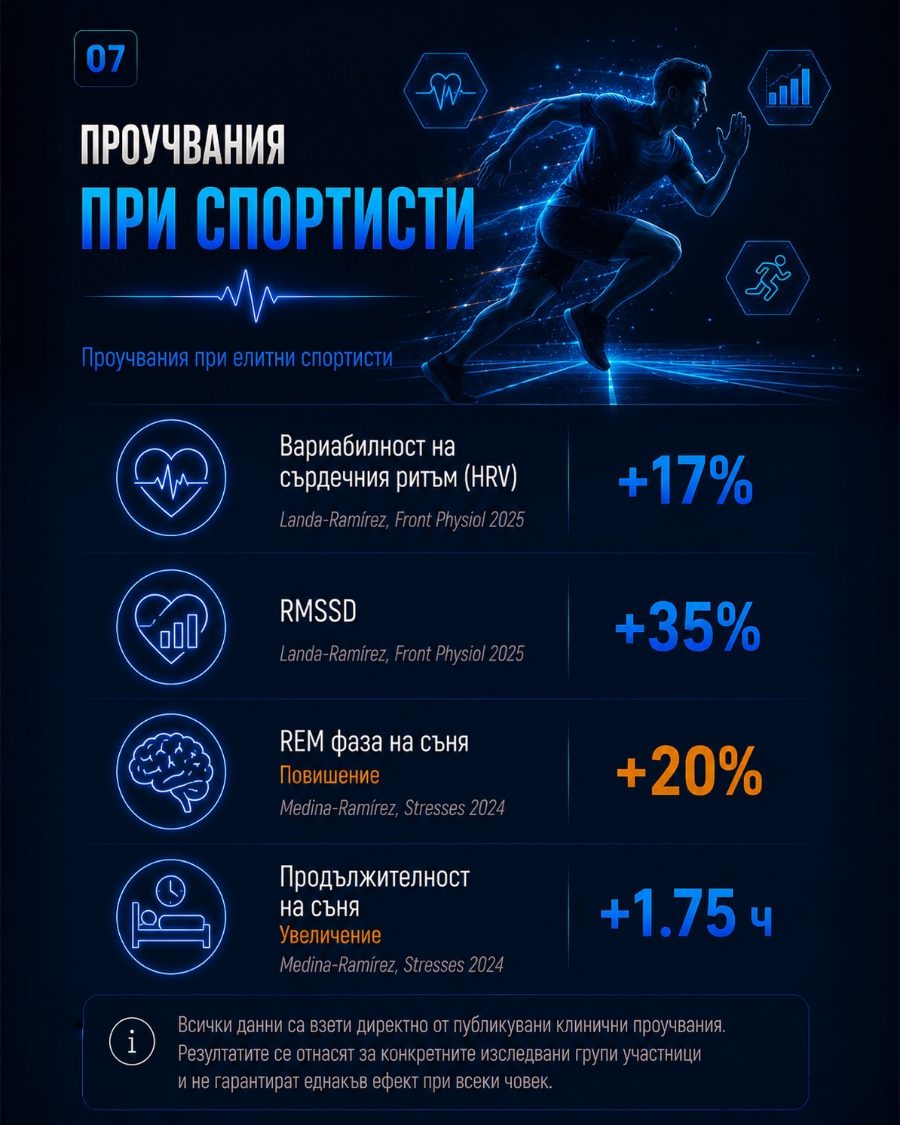
Medina-Ramírez, Stresses 2024; García et al., Front Physiol 2022. Individual results may vary.
A clear frame for the recovery cycle.
A typical course in sport. Parameters are adapted to load and the competition calendar by the sports physician or physiologist.
Built for sports practice.
Professional clubs & federations
Medical staff seeking objective management of recovery.
Sports-medicine centres
Physicians and physiologists integrating HRV into training.
Performance & recovery centres
Recovery studios for elite and amateur athletes.
Full specialist presentation — sports medicine.
Indications, protocols, programmes and clinical data for implementing NESA in your practice.
Short answers for professionals.
Is the therapy safe?
Yes. NESA is a non-invasive, low-intensity method with no known systemic side effects and no relation to doping regulations — it introduces no substances into the body.
How does it fit the training plan?
Sessions are scheduled on recovery days and around competitions. HRV serves as an objective readiness marker to adapt the load.
When are the first results felt?
Many report better sleep and recovery after 4–6 sessions; the change in HRV is measurable within the cycle.
Are there contraindications?
Pacemakers and other active electrical implants, pregnancy and epilepsy require prior medical assessment. When in doubt, consult the treating physician.
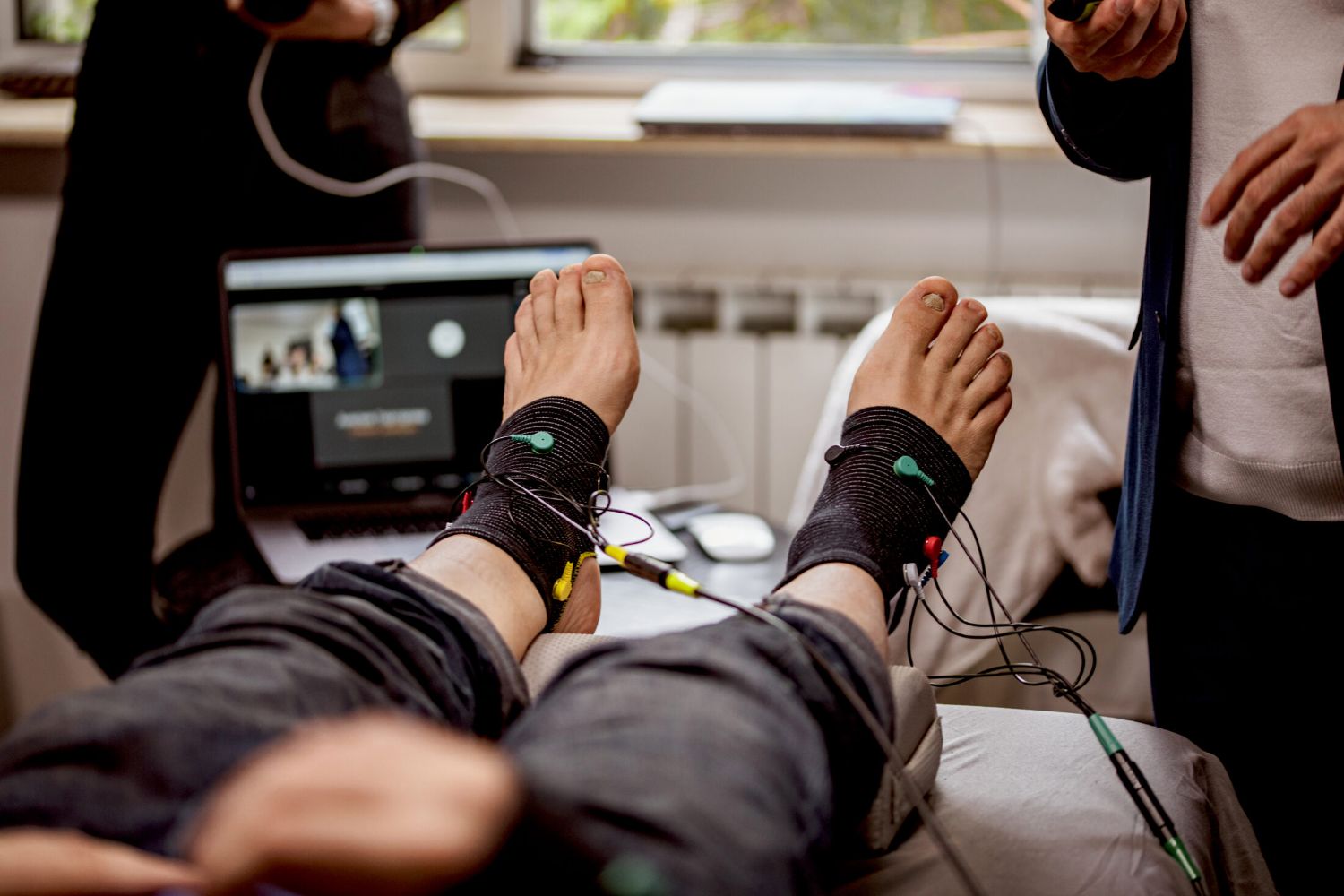
Microcurrents through the wrists and ankles — the whole autonomic axis at once.
Bring NESA into your sports programme.
At the core: programmes P1–P9
Every protocol in this field combines the reference programmes P1–P9 — general homeostasis, body levels, ANS/CNS and targeted nerves — according to the clinical goal.
See programmes P1–P9 →Protocols are guidelines.
Parameters are guides; the therapist adapts them to the patient.
NESA is applied after individual assessment — as part of the overall medical plan.
Absolute contraindications (pacemaker, pregnancy, active electrical implants) follow the device IFU.
Used and recommended by the medical teams and athletes of leading clubs.
The connection is through doctors, physiotherapists and athletes — clinical use, testimonials and interviews. It does not represent official club sponsorship.
Study in 12 professional basketball players (avg. 20.6 y): NESA neuromodulation across seasonal microcycles — HRV and sleep recovery (Oura), testosterone/cortisol ratio and cognitive function. Institutions: Innovation Hub FC Barcelona, University of Valencia, Sapiens Tenerife Clinic.
No banned substances — non-invasive microcurrent therapy (see the WADA Prohibited List); HRV as an objective recovery marker.
The clinical data as a shareable card.
The same numbers as above — in a ready-to-share format for colleagues, patients and social media.
Before you invest — the independent assessment.
We map clinical goals, workflows, budget and reimbursement — then recommend the solution that meets the department’s needs, not the easiest to sell.
NESA information pack
Enter your e-mail, confirm with one click — and the NESA presentations (BG · DE · EN) arrive automatically. Free, no spam.