
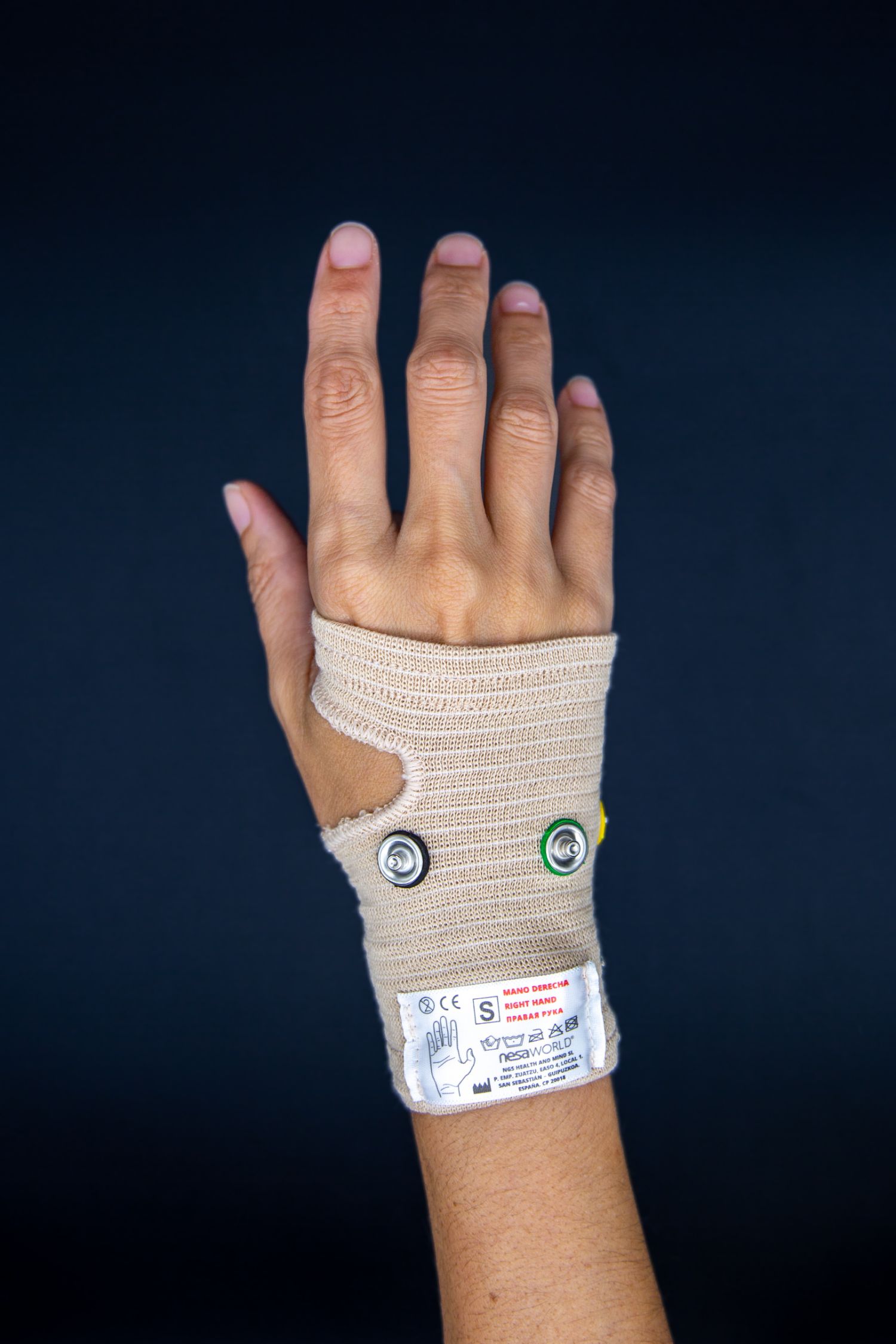
Movement and drainage in a natural rhythm.
NESA supports lymphatic drainage through non-invasive regulation of the autonomic nervous system.
Information for healthcare professionals
Do you recognise yourself?
Swelling, heaviness and slow drainage
Like a blocked return pipe — the water won’t drain. In oedema the autonomic tone regulates the vessels; with high “gas” venous return slows.
Self-assessment, not self-diagnosis — discuss with a professional.
Non-invasive modulation of the autonomic nervous system.
Drainage
Support for lymphatic circulation.
Swelling
Aid in reducing swelling.
Recovery
Support for tissue recovery.
Download the NESA presentation.
Mechanism, indications, protocols and clinical data for implementing NESA.
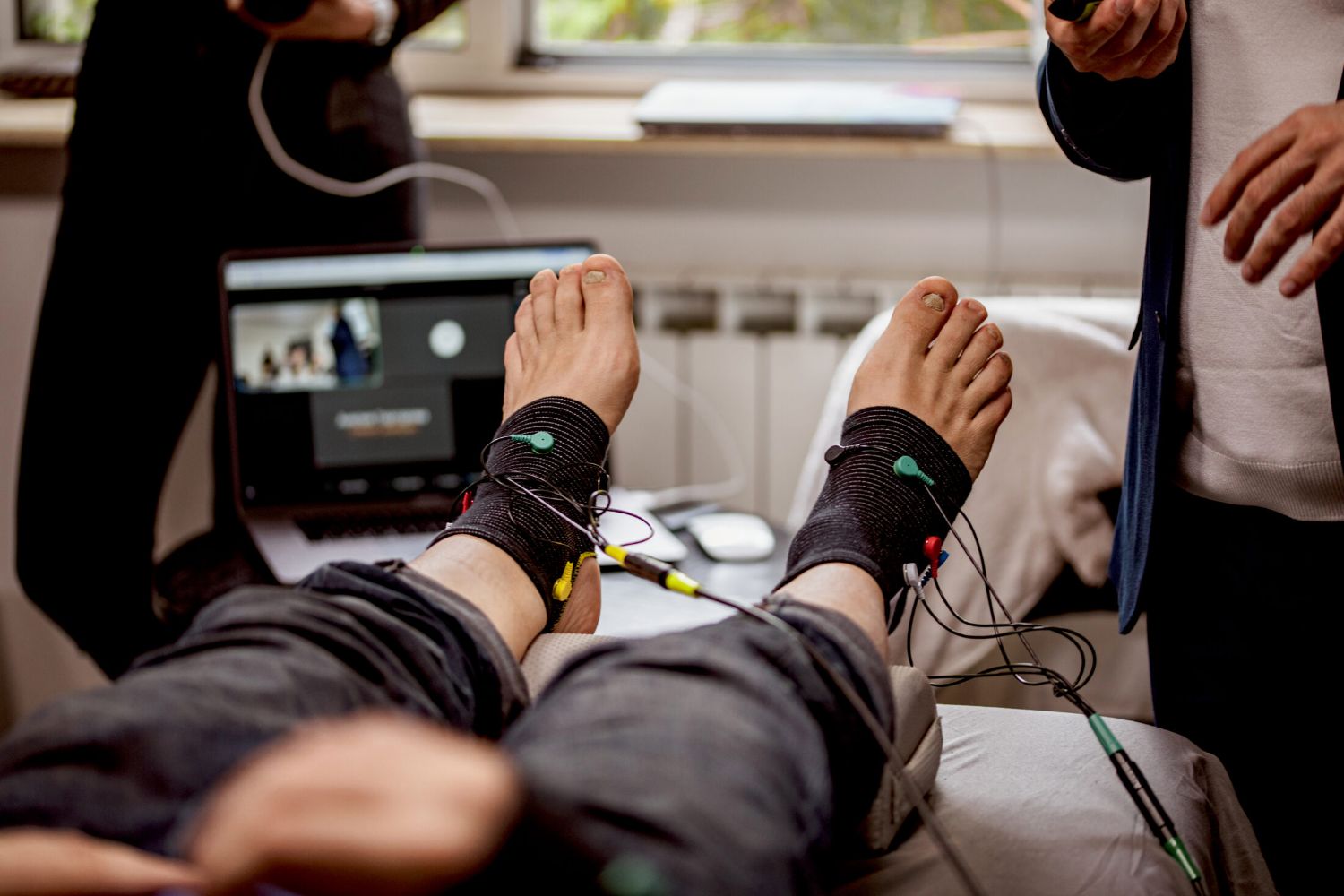
Microcurrents through the wrists and ankles — the whole autonomic axis at once.
A complement to manual drainage.
Lymphatic and vascular transport are substantially influenced by the ANS: the sympathetic system regulates vascular tone and microcirculation. NESA is used in parallel with manual lymphatic drainage — the lead electrode follows the physiological outflow path, distal→proximal, matching the direction of the manual technique.
Clinical fields: lymphoedema, synchronous with manual drainage (I3 — P7 lasting as long as the manual session; electrode moved distal→proximal along drainage zones) and upper-limb lymphoedema after mastectomy (G1 — 20–30 baseline sessions + maintenance, min. 3×/week; with extensive lymphadenectomy, more modest expectations, transparently communicated). Three phases: central (P1, C6–C7) → metameric (L3) → focal along the zones. 60-min session, LOW; no HIGH in the lymphoedema protocols.
For lymphological indications we build on NESA's general ANS evidence. Application is mechanism-based — autonomic regulation of microcirculation and vascular tone alongside manual drainage. As a general principle (not a lymphological endpoint):
carotid vasodilation (cross-sectional area) — Mínguez-Esteban, Front Neurosci 2025.
HRV (SDNN) and vagal tone (RMSSD).
Limits & safety: NESA is applied after individual medical assessment. Protocols are guidelines; they complement manual drainage. XSIGNAL is a medical device — applied after individual assessment. With an oncological history (common in post-mastectomy lymphoedema), application is by qualified staff within an interdisciplinary plan. Absolute contraindications: pacemaker and pregnancy.
Bring NESA into your practice.
Real values from the handbook (INF-CD-022)
Lymphoedema
Lymphoedema after mastectomy
Source: NESA protocol handbook · INF-CD-022 (2025-V.1). Standard session 60 min, LOW mode by default.
At the core: programmes P1–P9
Every protocol in this field combines the reference programmes P1–P9 — general homeostasis, body levels, ANS/CNS and targeted nerves — according to the clinical goal.
See programmes P1–P9 →Protocols are guidelines.
Parameters are guides; the therapist adapts them to the patient.
NESA is applied after individual assessment — as part of the overall medical plan.
Absolute contraindications (pacemaker, pregnancy, active electrical implants) follow the device IFU.
Before you invest — the independent assessment.
We map clinical goals, workflows, budget and reimbursement — then recommend the solution that meets the department’s needs, not the easiest to sell.
NESA information pack
Enter your e-mail, confirm with one click — and the NESA presentations (BG · DE · EN) arrive automatically. Free, no spam.